Walking Log Book 51: More Than Just Tracking Steps
You know the feeling. You set a goal to walk more—for your health, for your sanity, to explore your neighborhood—but after a few weeks, your enthusiasm starts to fade. The initial excitement is replaced by vague intentions. Was yesterday a 3-mile day or a 1-mile day? What was that beautiful route you found two months ago? A dedicated log book turns that vague intention into a tangible, rewarding practice. Walking Log Book 51 is a specifically designed print journal for this exact purpose. It’s a physical tool that helps you capture not just distance, but the experience itself.
Why a Physical Book for a Physical Activity?
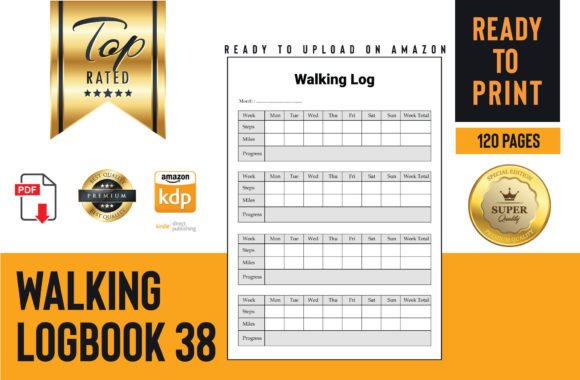
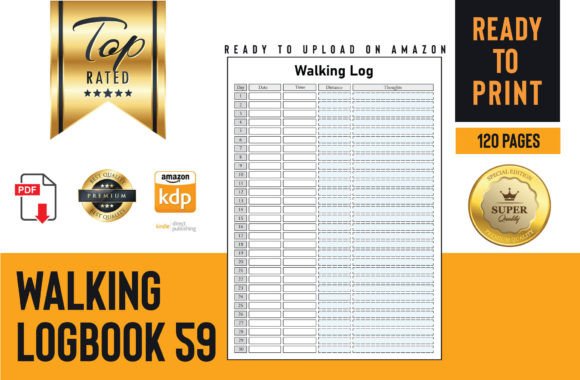
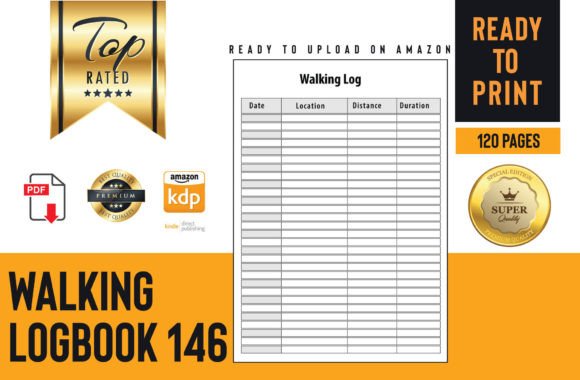
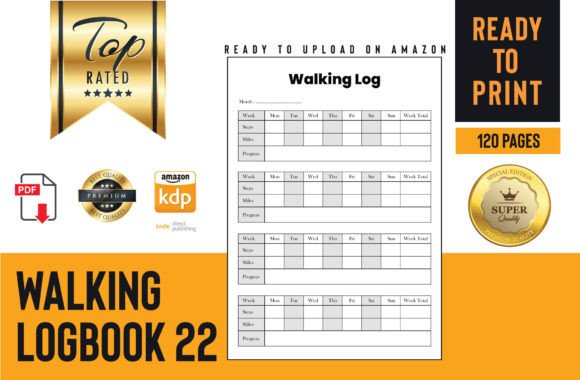
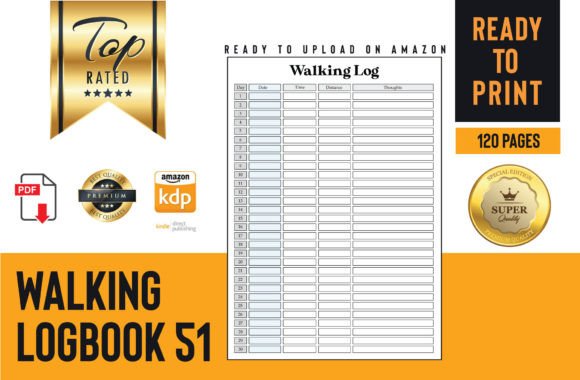
In a world of fitness apps and digital trackers, the choice to use a printed walking log might seem quaint. But its value lies in its simplicity and focus. Opening an app often leads to notifications, distractions, and a focus on instant metrics. Opening a book creates a moment of reflection. You’re not just logging data; you’re creating a record of a habit. For the creator designing it or the user filling it in, it represents a commitment. Walking Log Book 51 provides 120 pages of structured space in a clean 8.3 x 11.7-inch A4 format, ready for you to write down dates, routes, distances, times, and notes. The act of writing helps solidify the memory and the achievement.
The Many Faces of a Walking Log User
Who actually uses something like this? The user base is surprisingly broad.
A recovering patient, following a physiotherapist’s advice to gradually increase mobility, uses it to track incremental progress. Seeing “0.5 miles, park lane” written on Monday, followed by “0.8 miles, extended to the bridge” on Wednesday, provides visual proof of improvement that a fleeting screen notification doesn’t.
A busy parent uses their daily walk as the only guaranteed quiet time. Their log entries might note not just steps, but “saw the hawthorn blooming” or “finally thought through that work problem.” The log becomes a combined fitness and mindfulness journal, where the walk’s value is measured in both physical and mental clarity.
A content creator or blogger focused on wellness, local travel, or simple living might use the log to systematically gather material. Over time, the collected notes on routes, weather, and observations become a rich resource for writing posts, creating guides, or planning photo walks. The log is a raw data repository for their creative process.
An entrepreneur or freelancer battling the isolation of remote work commits to a midday walk to break the mental logjam. Their log entries could correlate walks with subsequent productivity. They might note, “30-minute loop after client call – cleared head, solved design issue in afternoon.” It turns a habit into a documented productivity tool.
Considering Your Own Walking Practice
Before you decide if a structured log is right for you, think about your current routine. Are you walking consistently but feeling like it’s getting lost in the blur of daily life? Do you have specific goals, like preparing for a charity walk or systematically exploring every trail in your county? Or are you starting from zero and need a framework to build accountability? A printed log like Walking Log Book 51 works best when you’re ready to engage consciously with your activity. It’s not for the person who wants fully automated tracking; it’s for the person who wants a hands-on record.
You should also consider the format. A high-resolution PDF ready for print means you can have it professionally printed or output it at home on your own printer. The 120-page count offers longevity—enough for several months of daily entries or years of weekly logs. The A4 size provides ample space for writing comfortably, not just squeezing in a few words. It’s a product designed for use, not just for sale.
From Features to Real Outcomes
The qualities of the log book translate directly into user outcomes. The simple, structured layout means you don’t waste time each day figuring out how to record your walk; you just fill in the blanks. This reduces friction and makes the logging habit sustainable. The physical nature of the book creates a permanent artifact. At the end of a year, you have a single volume you can review, seeing your progress, remembering the seasons, and reflecting on your consistency. This is profoundly different from scrolling through a list on an app.
For the KDP publisher or small business owner offering this product, understanding these outcomes is key. You’re not just selling a notebook; you’re providing a tool for habit formation, memory preservation, and goal achievement. Your customer might be a life coach looking for client resources, a wellness retreat creating welcome packs, or an individual buying it for personal use after recognizing the gaps in their digital tracking.
Integrating the Log into Daily Life
How does it fit into a real day? Imagine a teacher who walks after school to decompress. They keep Walking Log Book 51 and a pen on a shelf by the door. Coming home, they spend two minutes recording the route and jotting, “No rain today – busy day but walk helped reset.” It becomes a ritual that bookends their workday. A marketer or hobbyist birdwatcher might use the notes column extensively, sketching quick maps of walking paths or listing species spotted, transforming the log into a hybrid activity journal.
The key is that the log serves the walk, not the other way around. You don’t walk to fill the log; you fill the log to honor and understand the walk. This mindset shift is what makes the practice stick. It moves walking from an optional activity to a documented part of your lifestyle.
A Tool for More Than Fitness
Ultimately, Walking Log Book 51 is a tool for attention. In our distracted age, a walk is one of the last truly analog activities. Choosing to log it in an analog way deepens that experience. It encourages you to pay attention to your distance, your surroundings, your feelings, and your progress. For the freelancer, it’s a break from the screen. For the parent, it’s a reclaimed moment of peace. For the hobbyist, it’s raw material for their passion. For anyone, it’s a simple method to turn a good intention into a visible, rewarding trail of evidence, page by page, walk by walk.
If you find yourself wanting more from your walks than just counted steps—if you want context, memory, and a sense of cumulative achievement—then a dedicated log book provides the framework. It’s a ready-to-use, print-friendly product that turns a simple activity into a rich, recorded practice.