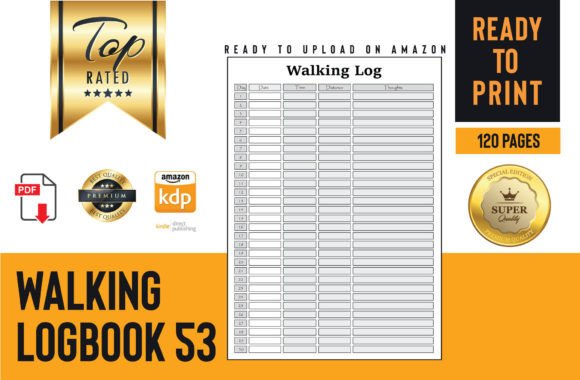
Walking Log Book 53: A Tool for Mindfulness and Creativity
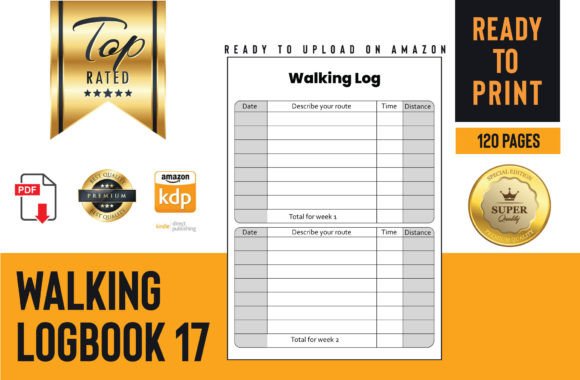
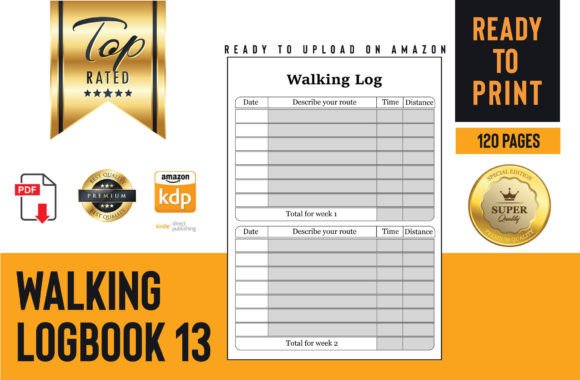
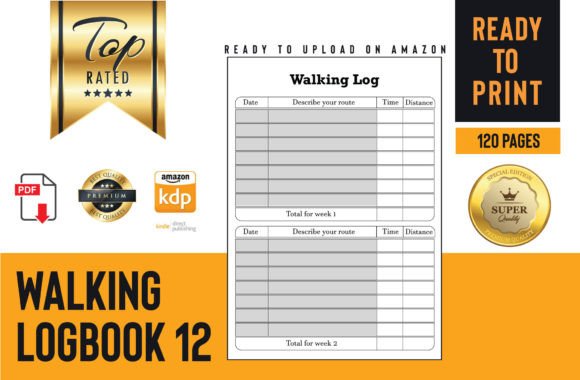
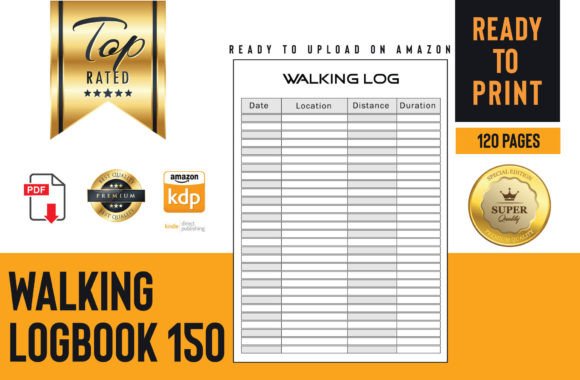
In the rush of daily tasks and digital notifications, the simple act of walking offers a profound reset. Walking Log Book 53 provides a structured yet open space to capture this experience. It’s more than just a count of steps or miles; it’s a dedicated companion for turning a routine activity into a practice of observation, reflection, and creative fuel. With its 120-page A4 format, ready for print, this log book is a tangible invitation to slow down and pay attention.
Beyond Mileage: The Core Utility of a Walking Log
At its most basic, a walking log serves as a record. You note the date, route, distance, and time. But the value of Walking Log Book 53 lies in its potential to go deeper. The blank space on each page isn’t just for data; it’s for context. What did you notice? How did you feel? What thought unraveled during those forty minutes? This shift from pure metrics to qualitative notes transforms walking from exercise into exploration.
This practice builds a unique personal archive. Over weeks and months, you create a map not just of streets and paths, but of your shifting mindset, seasonal observations, and fleeting inspirations. For creators, designers, and entrepreneurs, this archive becomes a reservoir of raw material. A texture you saw in the bark of a tree might later influence a design pattern. A snippet of overheard conversation could spark a blog post idea. The log book organizes these ephemeral sparks, making them retrievable and useful.
Adapting the Log for Different Goals and Audiences
The flexibility of Walking Log Book 53 is its strength. Its application changes entirely based on the user’s primary intention. A fitness enthusiast might focus on performance metrics, tracking pace and heart rate to visualize progress over 120 pages. An educator or hobbyist, however, might use it as a nature journal, sketching quick diagrams of leaves or jotting down bird species observed.
For the Creative Professional: Harvesting Ideas
Marketers, bloggers, and writers often struggle with the blank page. Walking Log Book 53 can serve as the ideation phase. Use it to capture fragments: a compelling shop front that tells a brand story, a headline idea based on a street sign, the rhythm of city sounds that could structure a podcast episode. The key is to record without judgment. The walk is for gathering; the editing happens later at your desk. This separates the creative pressure from the generative act, making brainstorming more fluid and less strained.
For the Mindfulness Practitioner: Grounding and Observation
For those seeking a grounding practice, the log becomes a tool for mindfulness. Each entry can be a simple list of sensory inputs: three things you saw, two things you heard, one thing you smelled. This directive focus pulls you out of internal rumination and into the present environment. The consistent format—the familiar 8.3 x 11.7 page—adds a ritualistic comfort, encouraging daily practice without overwhelm.
For the Entrepreneur or Freelancer: Structuring Reflection
Small business owners often solve problems in isolation. A walk, paired with the log, can frame strategic reflection. Use a page to walk through a single challenge. Note the problem at the top, then let your mind wander as you walk. Often, solutions or alternative approaches emerge not through forced concentration, but through relaxed, movement-aided thought. Writing them down immediately upon returning ensures they aren’t lost.
Practical Approaches and Project Ideas
To move from concept to consistent use, consider attaching a specific project to your log. This gives your entries a cohesive thread over time, making the compiled 120 pages a finished piece in themselves.
- The Seasonal Chronicle: Dedicate the log to tracking changes in a single park or neighborhood across seasons. Note flora, fauna, light, and foot traffic. This creates a rich, localized document that could inform photography, writing, or even community advocacy projects.
- The Urban Texture Study: Focus purely on visual and material details. Document patterns in brickwork, typography on old signs, the color palette of a district. These collected details are invaluable for designers, architects, and visual artists looking for authentic references.
- The Audio Log: Concentrate on sound. Describe the acoustic landscape of different times of day or areas. This sharpens descriptive writing skills and could be the basis for a soundscape mapping project or audio documentary.
- The Problem-Solving Walk: Use each walk to tackle a single, defined professional or personal question. The physical movement often unlocks associative thinking. The log entry becomes the solution draft.
Regardless of the project, consistency is key. The high-resolution, print-ready PDF format of Walking Log Book 53 means you can produce a physical book that feels substantial and inviting. The act of writing in a bound book, rather than a loose note, reinforces the commitment to the practice.
Maintaining Clarity and Effectiveness
To ensure your log remains a useful tool, not a cluttered notebook, adopt a simple framework. Decide on a core template for your entries—perhaps Date/Route/Observations/Insights—and stick to it. This creates uniformity that makes reviewing past entries efficient. Allow for flexibility within that structure; some days observations will be lengthy, some days a single sentence will suffice.
Keep your audience in mind, even if that audience is primarily yourself. Write clearly enough that your meaning is retained weeks later. If you plan to share insights from your log—perhaps in a blog, presentation, or creative project—consider annotating entries with a simple symbol marking ideas that feel particularly generative or shareable.
The beauty of Walking Log Book 53 is that it doesn’t demand artistic skill or profound expertise. It demands only attention. It is a tool for converting the mundane act of walking into a structured practice of awareness. For the busy professional, it offers a forced pause. For the creative, it offers an unpressurized idea funnel. For anyone seeking a bit more presence in their day, it offers a simple, paper-based path to finding it. The 120 pages are not a requirement to fill, but an opportunity to explore, one walk at a time.