Unlocking Your Walks: The Power and Purpose of a Walking Log Book
In an age dominated by digital fitness trackers and smartphone apps, the humble Walking Log Book stands as a surprisingly potent tool for personal wellness, goal achievement, and even creative entrepreneurship. More than just a notebook, it is a dedicated space for intentional reflection, progress tracking, and turning a simple activity into a meaningful ritual. Whether you're a casual walker seeking consistency, a health enthusiast monitoring progress, or an aspiring publisher exploring the KDP (Kindle Direct Publishing) marketplace, understanding the walking log book reveals its multifaceted significance in modern life.
What Is a Walking Log Book, and Why Does It Matter?
A walking log book is a physical journal designed specifically to record details of your walking routines. Unlike generic notebooks, it often provides structured sections to log data such as date, route, distance walked, time spent, weather conditions, personal observations, and even mood or energy levels. Its core purpose is to transform walking from a spontaneous activity into a tracked, accountable, and reflective practice. This tangible record serves several crucial functions: it provides concrete evidence of your commitment, helps identify patterns and plateaus, motivates through visible progress, and enhances mindfulness by encouraging you to pay closer attention to each walk's experience.
In a world where health is increasingly data-driven, a log book offers a low-tech, deeply personal alternative to algorithmic dashboards. It puts the individual back in control of their narrative, fostering a stronger connection between action and outcome. For many, the act of writing itself reinforces memory and intention, making the log book a powerful psychological anchor for habit formation.
The Anatomy of a Practical Walking Log
An effective walking log book balances structure with flexibility. Key sections typically include:
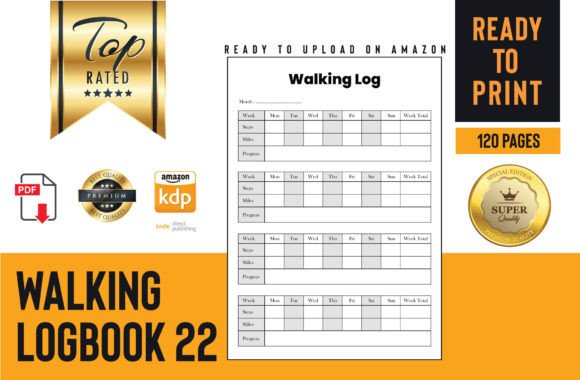
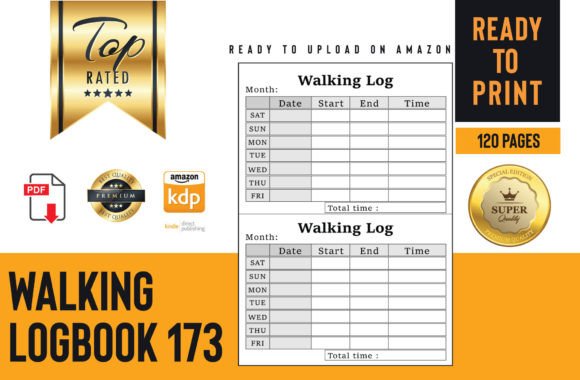
- Daily/Weekly Entry Pages: The core logging space for date, distance, duration, and route name.
- Notes & Observations: A free-form area to jot down what you saw, felt, or thought. This turns exercise into an experiential journal.
- Progress Summary Charts: Monthly or quarterly overviews to visualize cumulative distance, frequency, or time trends.
- Goal Setting Pages: Pre-dedicated spaces to define short-term and long-term objectives, like walking 100 miles in a season or completing a specific trail.
- Inspiration or Resource Pages: Some logs include maps, local trail ideas, or motivational quotes to keep engagement high.
The physical design is also important. A size of 8.3 x 11.7 inches (A4) offers ample space for writing and charts without being cumbersome. High-quality, high-resolution interiors ensure the print is clear and pleasant to use, enhancing the user experience.
From Personal Tool to Publishing Opportunity: The KDP Angle
The personal utility of walking logs naturally intersects with the world of content creation and self-publishing. Platforms like Amazon's KDP have democratized publishing, allowing anyone to design and sell physical books globally. This has created a vibrant niche for practical, niche journals like walking log books.
For the creator, publishing a Ready to Upload Print Walking Log Book for KDP represents a unique opportunity. It merges a genuine understanding of a hobbyist's needs with entrepreneurial action. A well-designed log book sold on KDP isn't just a product; it's a toolkit delivered to a community of like-minded individuals. The requirements for such a project are specific: a print-ready PDF file, professionally designed high-resolution interiors, and a page count that feels substantial without being wasteful—often around 120 pages to provide a full season or year of logging space.
This journey from concept to product exemplifies how personal passion can fuel a micro-business. The publisher must think like a user, anticipating what a walker would want to record, and then execute like a designer, ensuring the book is visually coherent and technically perfect for print.
Common Misunderstandings About Walking Journals
Several assumptions can prevent people from fully embracing or accurately valuing a walking log book.
- "Digital Apps Are Superior": While apps offer automation, they often lack the reflective depth and customization of a physical log. The manual entry process is itself a mindful act that reinforces the habit.
- "It's Only for Serious Athletes": Absolutely not. A log book is equally valuable for a beginner establishing a routine or someone walking for mental clarity rather than physical performance.
- "The Data Is the Only Important Part": The qualitative notes—observations, moods, thoughts—are frequently where the most profound insights and joys are discovered, connecting exercise to overall well-being.
- ("Creating One for KDP Is Just About Filling Pages" A successful KDP log book requires understanding user intent, providing logical structure, and delivering aesthetic quality. It's solving a problem, not just selling paper.
Integrating a Log Book into Modern Daily Life
How does this analog tool fit into a digital, fast-paced lifestyle? Seamlessly. It acts as a counterbalance. The daily or weekly ritual of updating the log creates a moment of pause—a deliberate disconnect from screens to reflect on a real-world activity. It complements technology rather than competing with it; one might use a GPS watch to measure distance accurately and then transfer that number into the log alongside handwritten impressions.
In contexts of work, a walking log can manage stress and improve creativity by providing a documented outlet for midday breaks. In education, it can be a project for students learning about data tracking, geography, or personal health. For creativity, the observation sections encourage a writer’s or artist’s eye, turning walks into source material. The log book, therefore, becomes a versatile hub that connects physical health, mental well-being, and creative expression.
Examples of Log Book Impact
Consider a few scenarios:
- A retiree uses the log to map out explorations of local parks, turning routine into adventure and leaving a memorable record of their year.
- A person recovering from an injury meticulously tracks gradual increases in distance, using the log as a motivational testament to their healing journey.
- An entrepreneur publishes a tailored "Urban Walking Log" on KDP for city dwellers, featuring sections for café stops and architectural sightings, successfully tapping into a specific market.
- A family uses a shared log book to plan and record weekend nature walks, bonding over the collective entries and plotted progress.
These examples show the log's adaptability. It serves individual goals, community sharing, and even commercial innovation.
Building a Broader Understanding: Beyond the Steps
Ultimately, a walking log book teaches a broader principle: the value of intentional documentation. It shows that any repeated activity, when observed and recorded, gains depth, meaning, and momentum. Whether you are a user seeking to enhance your walks or a creator looking to publish a ready-to-upload 120-page walking log for KDP, the core lesson is the same. Attention transforms experience. A log book is a tool for applying that attention systematically.
It bridges the gap between action and insight, between hobby and enterprise. By starting with the simple act of noting down a route and a distance, you open a path to greater self-awareness, consistent achievement, and perhaps even a new understanding of how to design and share tools that enrich others' lives. In the end, the walking log book is more than a product or a personal diary; it is a framework for mindful progress, available to anyone ready to pick up a pen and take the first step.